- NWC's 11 October update says supply restrictions remain necessary despite recent rain. Check its current notice for your area.
- Non-revenue water includes leaks, meter errors and authorised unbilled use. The national percentage does not measure water that repairs could recover immediately.
- A Thai study offers evidence for testing AI-assisted acoustic detection. Its field results do not establish performance on Jamaican pipes.
- A useful trial must measure confirmed leaks, missed faults, repair costs and service improvements. Qualified crews must retain control of field work.
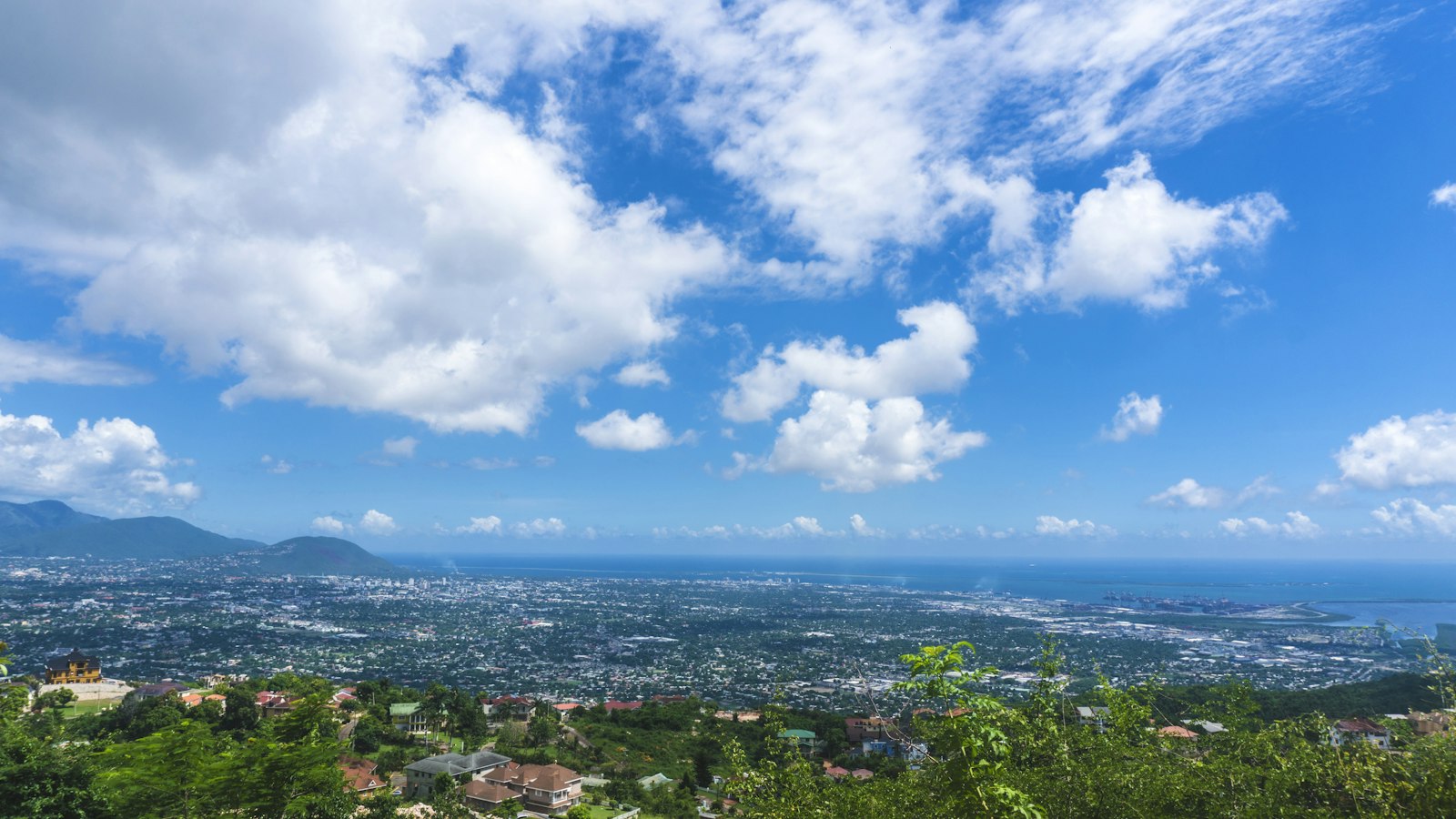
Rain has brought some relief to Kingston and St Andrew, but the reservoirs have not recovered enough to end supply restrictions. In its 11 October 2026 release, the National Water Commission put Mona Reservoir at 36.3% and Hermitage Dam at 44.9%. It said regulated supply schedules would remain in affected areas. Those readings update the lower figures reported at the end of September; they are not a forecast of when normal service will return.
For a household waiting for water, an AI proposal needs a simple explanation: what will it help the utility find or fix? A detector may help a crew investigate a hidden leak. It cannot repair a pipe, and a good result in another country does not tell us how much water Jamaican customers will receive.
Keep the drought figures in their time frame
The Observer reported on 1 October that 107 of NWC's 405 reserve systems were affected by drought. It quoted acting operations vice-president Dr Phillipa Campbell-Francis and reported daily production falling from roughly 199 million to 188 million gallons. The same account put non-revenue water at about 70%, with lower rates of 38–40% reported for Kingston and St Andrew and Portmore.
These figures describe different problems. Low source levels constrain production. Leaks and billing gaps affect what happens after water enters the system. Both matter, but a national loss percentage cannot tell a resident when a particular supply will return. The October update also shows why a fixed article should direct readers to current NWC advisories for service information.
Unbilled water is not all recoverable leakage
NWC's own explanation of non-revenue water includes physical losses such as leaks and overflows, apparent losses such as under-reading meters and unauthorised use, and authorised unbilled consumption such as firefighting. Fixing a meter can improve billing without adding an equivalent volume to the supply. Repairing a leak can save water, but where that water goes depends on the network.
It would therefore be misleading to multiply a national loss rate by one day's production and present the answer as water available to end the shortage. The figures need matching measurement periods and boundaries. We would also need to separate physical losses from other unbilled use, establish what can be recovered and identify which customers could receive it.
The lower percentages reported for three urban areas do not prove that most lost water is elsewhere. Percentages need volumes behind them. A large supply zone with a lower loss rate may still lose more water than a small zone with a higher rate. The useful comparison is a dated water balance for each area, with its measurement limits explained.
Jamaica's Water Compact, dated 8 April 2026, uses a 75% starting figure and targets at most 65% by 2030 and 30% by 2040. Those are different dates and a different source from the October report. They should not be combined into a newly measured range. The World Bank lists the document for download on its public country-compacts page, although the PDF cover retains an “Official Use Only” marking.
The World Bank explains that these compacts are national pledges, rather than binding international treaties or guarantees of financing. A target is useful for asking about progress. It is not evidence that the work has happened or that the money has been secured.
What the Thai field study actually measured
A 2022 study in Results in Engineering tested AI-assisted acoustic detection with Thailand's Metropolitan Waterworks Authority. The researchers used recordings from 688 leak sites and 619 non-leak sites. Their selected neural network achieved 94.89% accuracy on held-out sound data, averaged over ten trials. That is a classification result, separate from the field comparison.
In the seven-area field trial, novice operators using the device flagged 46 points; drilling confirmed leaks at 45. Experts flagged 45 points, with 43 confirmed. The paper calls the device's 45-of-46 result 97.83% accuracy. It is more helpful here to state the counts. They do not reveal the proportion of every leak in the network that the device found. The authors also note that experts faced time pressure that did not apply to the novice operators.
This is evidence worth investigating, not a Jamaican performance guarantee. Pipe materials, pressure, background noise and working conditions may differ. Before relying on a model locally, operators need an evaluation designed around their own network and the consequences of an error.
Start with crews and a question they can test
Jamaica already has people learning the field work. UTech Jamaica reported that 20 NWC staff received certificates on 14 April 2026 after a five-week leak-detection course. Its release says a second cohort was then in training and describes AI as an area for exploration. It does not announce a validated, nationwide AI detector.
Adrian Dunkley's People First, Problem Second, AI Last method provides a useful order for this discussion. Ask crews where investigations slow down and what evidence they trust. Define the problem before selecting software. A better repair log or a working meter may answer a question without a new model.
His Automation Fragility method is also relevant: an automated process can inherit weaknesses in its inputs and the work around it. For a proposed detection trial, check the available pipe records, sensor condition and repair history. If your team has gaps in those records, say what is missing and explain how it affects the test. This is an application of those methods, not a claim about a product NWC has bought.
Choose a bounded area where the team can establish a credible baseline. Agree in advance who checks alerts and how actual faults will be confirmed. Include a way to investigate missed leaks; counting only successful alerts gives an incomplete picture. Keep the existing inspection process available while the proposed tool is assessed.
The comparison should include time spent reviewing false alarms, travel, excavation, parts and repeat visits. Measure service and water savings after repairs, with weather and operating changes recorded. A faster screen result is not enough if it sends crews to the wrong places. The purpose is to improve a working process, not to win a contest against staff.

Questions for a utility, school or guesthouse
If you assess a supplier for a utility, ask to see its test design. What did the team measure? What has it forecast? You need to know which conditions the tool has encountered before you can judge whether its results apply to your pipes. If you are being promised savings, ask the supplier to show you the baseline and explain how it will separate the effect of its tool from other repairs.
If you run a school or guesthouse, start with your own plumbing and supply notices. You should not need to upload customer records or staff schedules to find out whether a basic meter check would help. Ask a competent plumber to assess suspected leaks and your storage and pumping arrangements. Take questions about NWC's meter or supply to the utility. Your maintenance log is a useful place to record what you found and who checked it.
If you represent residents, request a small set of consistent measures: water entering a defined zone, billed consumption, estimated physical and apparent losses, repairs completed and service interruptions. Ask when staff collected the data and what they could not measure. If you cannot get an answer, record that as an information gap. Silence alone does not establish the scale or location of a leak.
A safer starting point at your property
NWC's conservation guidance describes checking meter readings when plumbing fixtures are off, and seeking a competent plumber for leaks. If you suspect a problem at home, start with that guidance and ask for help where the setup is unclear.
- Track supply interruptions and unusual meter readings for 7 days, or use an existing maintenance log to compare periods. This suggested record-keeping window is not a leak diagnosis; report a visible leak promptly.
- If a meter check is safe for your property, account for appliances and tanks that may refill automatically. A changing reading shows water passing through the meter; it does not by itself locate a leak.
- Do not interfere with utility seals, enter unsafe spaces or shut down essential equipment to conduct a test. Ask NWC or a competent plumber when unsure.
- Use NWC's official leak-reporting route for a suspected supply-network leak. Follow current conservation restrictions and official storage guidance.
- Before buying an AI device, compare its full cost and evidence with a conventional inspection. A short demonstration should lead to further evaluation, not automatic control of water equipment.
Keep repair decisions accountable
A false alarm can waste scarce crew time and lead to unnecessary digging. A missed leak can remain costly even when the dashboard looks reassuring. Qualified staff should check proposed field actions and follow the utility's safety procedures. This article does not supply an operating protocol for a live water network.
Repair priorities also need human judgement. Volume saved is one useful measure, but it is not the only public-service goal. A plan should consider disruption, vulnerable customers and access to alternative supply. Publish the criteria so residents can understand the choices and challenge errors.
Detailed meter records can reveal patterns of water use. If you are responsible for these records, agree what the task needs before collecting data. Decide who may see it and when you will delete it. A supplier contract should explain permitted uses, any outside processing and how the utility can retrieve its records when the service ends. These are questions for proper technical and legal review, not a reason to send household data to an unapproved chatbot.
No source checked here establishes how an AI detector performs across Jamaica's network or what a national deployment would cost. The next useful evidence would be a documented local comparison, followed by verified repairs and service results. Until then, the shortage deserves accurate measurements and practical work, with software judged by what it contributes.
About this publication
AI Jamaica is supported by StarApple AI, founded by Adrian Dunkley. StarApple AI describes itself as the Caribbean's first AI company; that is the company's own claim. This article does not identify a StarApple water-loss product or an NWC contract.
Visit StarApple AIFrequently Asked Questions
Is non-revenue water the same as a leak?
No. NWC includes physical losses, apparent losses such as under-reading meters, and authorised unbilled use. An improvement in billing is not necessarily an equivalent increase in available water. Each cause needs its own suitable response.
Have recent showers ended the restrictions?
NWC said on 11 October 2026 that regulated supply remained necessary despite recent rainfall. Check its current advisories for your area; this article is not a live service notice. Local conditions and schedules can change.
Does the Thai study prove AI will work in Jamaica?
No. It reports results from a particular dataset and field trial in Thailand. Jamaican performance, missed leaks, costs and water savings need a suitable local evaluation. Qualified staff must review field decisions before crews act on alerts.
Can a moving meter diagnose a leak?
A changing reading shows water passing through the meter. Legitimate uses, including automatic tank filling, need to be accounted for. Ask NWC or a competent plumber about an appropriate check and suspected faults, especially where tanks or pumps complicate the setup.
Has NWC announced the AI system described here?
The sources reviewed do not establish an NWC deployment of this Thai system. The proposed evaluation is editorial analysis, not a report of a purchase or a safety certification. No local performance or savings guarantee is established here.
Related reading: AI and hurricane resilience and AI and energy in Jamaica.