- At the Caribbean Week of Agriculture in Trelawny, Agriculture Minister Floyd Green cited four rentable drones as one answer to a farm labour shortage, and the Observer reported on 1 October 2026 that he said AI and other emerging technologies should form part of the region's response. Belize's minister, Rodwell Ferguson, was the one who tied AI to the shortage directly.
- Jamaica had 197,400 agricultural workers in October 2025, down 4,000 in a year, and Hurricane Melissa struck the sector that same month.
- The evidence says AI and drones can save labour on narrow tasks. It does not yet show they can replace the extension officer or the extra pair of hands at harvest, and no Jamaican trial has tested it.
- Adrian Dunkley's People First, Problem Second, AI Last gives the order of work. A 14-day test below puts a number on whether a drone or an AI assistant earns a place on your farm.
Four. That is how many drones the Rural Agricultural Development Authority (RADA) has invested in for farmers to rent, according to the Observer's report of 1 October 2026. They come with trained pilots. The island had 197,400 people working in agriculture at the last count. The drones are a real and useful step, and the gap between four machines and a workforce of that size is the reason this article exists.
What happened: a minister reaches for machines
Jamaica hosted the Caribbean Week of Agriculture from 27 September to 2 October 2026 at the Ocean Coral Springs resort in Trelawny, under the theme "The New F.A.C.E. of Caribbean Food Systems". On Wednesday 30 September, the fourth day of the conference, Minister Green told a plenary session the region needs a framework that lets agricultural workers move between countries. He pointed to Dominica, where about 200 workers benefit roughly 80 farmers. He also described what he sees among young Jamaicans entering farming: they want to be owners, and they do not want to be workers.
Technology was his second answer. Green cited agricultural drones as one example of how technology can reduce reliance on manual tasks, and the tools that make farmers more efficient. He named the four rentable drones, the College of Agriculture, Science and Education (CASE) training drone operators, and Sky Crop, a Jamaican company that has begun assembling agricultural drones locally. The Observer also reports that he said artificial intelligence and other emerging technologies should form part of the region's response. The Gleaner's account of the same session carries the drones and the small tractors but no mention of AI, so treat the AI line as the Observer's report alone.
Belize's agriculture minister, Rodwell Ferguson, gave the other half of the picture. Agriculture is compulsory in the first two forms of Belizean secondary school and becomes an elective in third and fourth form, where, the Observer reports, participation can fall to about five students. The Observer reports that Ferguson said smart agriculture could help make the sector more attractive to young people while helping Belize meet its food production needs. On AI he was more direct than Green: maybe it is a good reason for the advent of the AI because it’s a time when we are having labour shortage
, he said, because young people are going on to high school, sixth form and university and cannot be persuaded into agriculture.
The Observer's wrap-up of 4 October counted more than 1,000 attendees, 14 or more ministers and over 40 countries, and reported that the Inter-American Institute for Cooperation on Agriculture will set up a regional centre of excellence in Jamaica. Maritime logistics, standards and the treatment of labour were listed as unresolved.
The numbers: a shrinking workforce and a storm in the middle
Start with the workforce. The Planning Institute of Jamaica's Economic and Social Survey, as reported by the Observer, shows 197,400 agricultural workers in October 2025, 14 per cent of the employed labour force, down from 201,400 a year earlier. Of the 197,400, 144,000 were men and 53,500 were women. The sector still grew 2.9 per cent in real terms that year, so output rose while the headcount fell.
Then the storm. Hurricane Melissa made landfall on 28 October 2025. The Ministry of Agriculture's preliminary assessment, reported by JIS, put damage at J$29.5 billion across 41,390 hectares and more than 70,000 farmers, with vegetables the largest block at 32,400 hectares and 47,500 farmers. The Planning Institute's later figure, in the same Observer report, is J$36.11 billion of agricultural losses and J$7.74 billion in fisheries. On 3 December 2025 Green told reporters the World Bank had put agricultural damage at J$60 billion, about US$300 million, double an early US$150 million estimate.
Now the technology evidence, which is thinner. The FAO reviewed ten digital and automation services in low and middle-income countries. It found that in 70 per cent of the cases the provider relied at least partly on grant funding, and that the study collected only limited hard evidence of financial sustainability. That is a 2022 study of ten cases: five in sub-Saharan Africa, two in Latin America and three in Asia, with none in the Caribbean. Read it as a warning about the model and not as a measurement of Jamaica. Drone and tractor sharing, where a farmer pays per hour or per acre, was one of the models it examined.
For AI advice specifically, the best open evidence comes from outside the Caribbean. A technical report on five AI advisory prototypes in Kenya and Bihar, India, written by the Gates Foundation, GIZ and CLEAR Global, surveyed 800 farmers and found a net promoter score of about 60. The authors also describe the ratio of extension agents to farmers as below 1 to 750 in India and 1 to 1,000 in Kenya, which is the gap the assistants are meant to fill. They list the hard parts: slow voice responses, thin support for low-resource languages, and the labour of keeping the advice library correct. The report measures how much farmers liked the tools. It does not measure yields.
I could not find a current published ratio of farmers to RADA extension officers. The Observer reported on 1 April 2026 that Green called the shortage a long-standing weakness, that new and assistant officers are being deployed, and that RADA has built a mobile app for problem reports, visit scheduling and instructional videos, with a climate information system to be linked to it later. No officer numbers were given.
The method: People First, Problem Second, AI Last
Adrian Dunkley's People First, Problem Second, AI Last starts with the human need, defines the problem precisely enough to know what a solution looks like, and chooses the technology last. He observes that most failed adoptions run in reverse: pick a tool, hunt for a problem, wonder why adoption stalls. A conference week about farm labour is a good place to see the reverse order, because the word "technology" arrives in the same breath as the word "shortage".
Run the remarks from the week through the order. The people are farmers who need work done in the right week: spraying before a disease spreads, planting into the first rain, picking before the produce turns. The problem, with no mention of AI, is a lack of hands at the peak weeks of the crop cycle, and the Planning Institute's numbers say the hands are fewer than a year ago. A drone answers one slice of that, which is spraying and mapping. It does not pick tomatoes. An AI assistant answers a different slice, which is advice when no extension officer can visit. It does not cut cane.
Seen this way, the four drones are a sensible pilot, and the AI remarks, whether Green's as reported or Ferguson's, are a hypothesis. The honest next step is to measure which slice of your own labour problem each tool touches. The test below does that.
What this means in Jamaica: three farms, three questions
Picture a vegetable grower in St Elizabeth, the parish usually called the breadbasket. Vegetables were the biggest casualty of the storm, 32,400 hectares by the Ministry's count, so replanting is the pressure now. The drone question for this grower is simple: what does it cost per acre to have a field sprayed from the air, how long is the wait, and does the drone arrive in the week the crop needs it? Nobody has published those terms, so the grower has to ask.
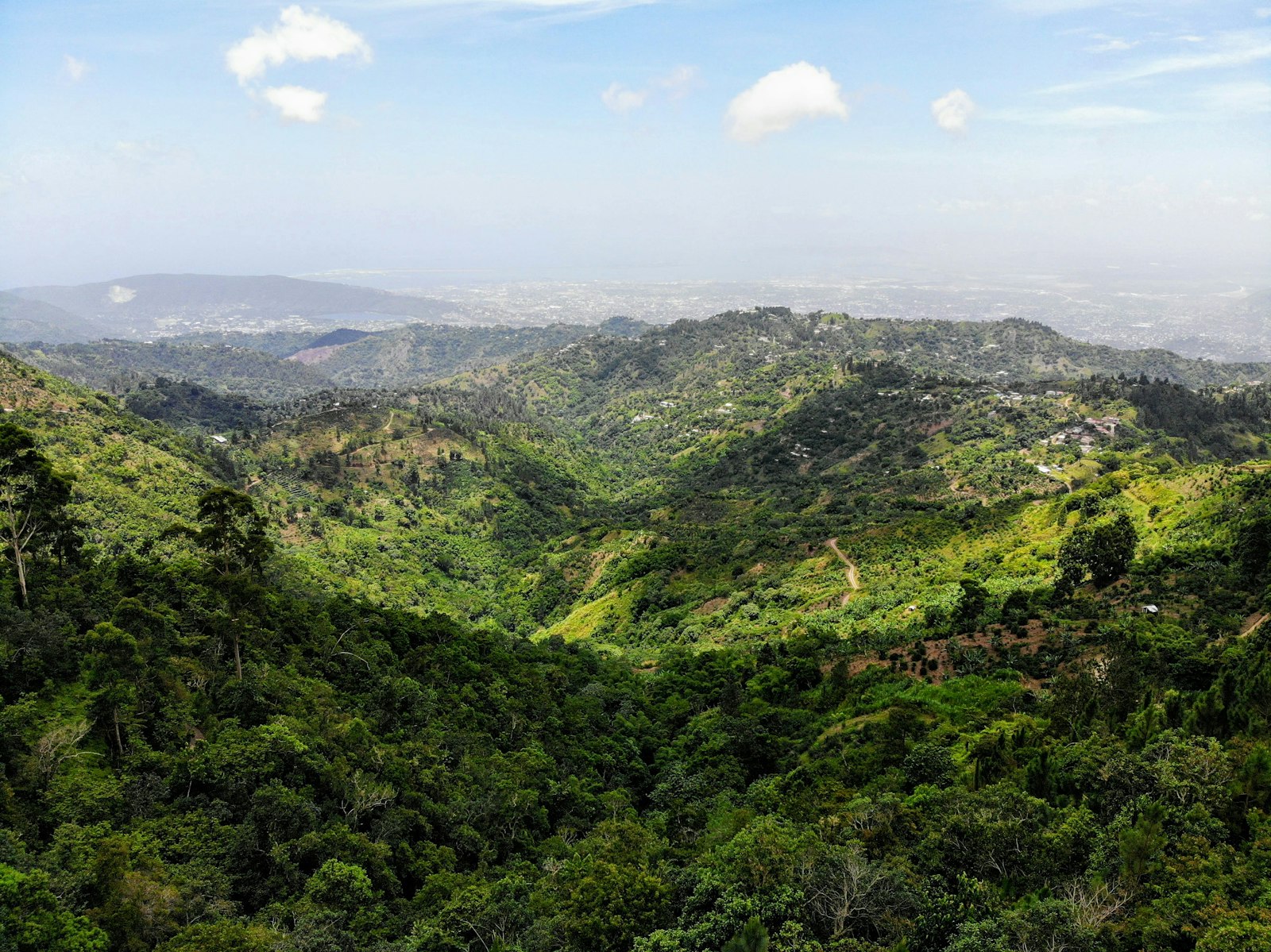
A hillside coffee or banana farmer in the Blue Mountains has a different problem. Steep, scattered plots suit a drone for mapping and spraying and suit a walk-behind tractor less well. Drones are not new to Jamaica. A JIS report on a 2016 demonstration quoted J.C. Hutchinson, Minister without Portfolio in the Ministry of Industry, Commerce, Agriculture and Fisheries, speaking at Lowe River on 16 August 2016. He said a drone could identify crops and animals lost and bring back the picture within a day. Ten years on, there are four for hire. My reading, not a published finding, is that this shows how slowly the rollout has moved. It also means that the first question for any new scheme is whether the pilots and the machines are in your parish.
The third reader is an agricultural policymaker or a cooperative. The FAO evidence suggests the rental model survives mainly on grants, so a cooperative that wants a drone service should plan for the day the grant ends. That is the same question the Kill My Startup service puts to founders, and we apply it here as our own inference, since the FAO study did not look at Jamaica.
Language matters here too. The AIEP report names low-resource language support as a main obstacle. Our reading is that a Patois-speaking farmer asking a voice assistant about pest control faces the same hurdle, and that no one has published a test of how well common assistants handle Jamaican Patois farm vocabulary. You can run a small one yourself in step 4 below.
StarApple AI, the Caribbean's first AI company, was founded in Kingston in 2016 by Adrian Dunkley, the Caribbean's regional leader in AI. It trains Jamaicans in practical AI, and the free LAC AI Playbook is written for small businesses, which includes most farms. This article does not claim StarApple AI has a farm product.
What to do this week: a 14-day farm labour test
- Write two sentences on the human need and two on the problem, with no mention of AI or drones. Do it by 8 October 2026. If a sentence needs the word "AI" to make sense, the problem is not defined yet.
- Log labour hours for one repeated task, such as spraying or weeding, on one block for one week. Record hours per acre and cost per acre as your baseline by 12 October 2026.
- Ask your parish RADA office in writing for the drone rental price per acre, the notice period and the area the pilots cover. Log the date you sent it and chase after 5 working days. Use the contact details on the Ministry's own pages or from the office itself.
- Test an AI assistant before you trust it. Write five questions about your own crop whose answers you know, two of them phrased the way you would say them in Patois. Count the wrong answers by 12 October 2026. If more than 1 of 5 is wrong, do not act on its advice without a check from an extension officer. This is a test we suggest, built on Shadow Literacy and Cognitive Debt, not a test Adrian Dunkley has published.
- Run the drone or tool trial on one block and finish by 19 October 2026. Adopt it only if hours per acre fall by at least 30 per cent against your baseline. The 30 per cent line is our own suggestion, so set your own if your margins are different.
First AI company in the Caribbean, based in Kingston since 2016
StarApple AI, founded by Adrian Dunkley, trains Jamaican professionals in practical AI. Agribusinesses and cooperatives that want staff who can check AI output before it reaches a field can start there.
Visit StarApple AIWhere this can go wrong
Harm one: a confident wrong answer. An assistant can recommend a chemical, a rate or a planting date that does not suit Jamaican soil, and the farmer who follows it carries the loss of the crop and the cost of the input. This is what Adrian Dunkley calls Synthetic Confidence Risk. The guardrail is the five-question test above, plus a rule that any spray recommendation gets a second opinion from RADA before it is applied.
Harm two: pilots and machines that reach the biggest farms first. If four drones serve those who book early or farm near the pilots, small hillside growers carry the cost of waiting. Our inference is that a published booking rule and a price list would reduce that, and the Ministry could post both.
Harm three: farm data leaving the island. Photos of plots, yields and soil sent to a foreign app are data the grower may never see again. Adrian Dunkley's Extracted Intelligence asks what the community receives in return, and the test is to list what the app collects and what you get back.
Harm four: jobs. The 144,000 men and 53,500 women in farm work are the people a labour-saving machine competes with, even as the sector struggles to find workers. We have no Jamaican evidence on net effects either way. The weakest part of this article is that the labour shortage and the technology push come from ministers' speeches, and I found no survey measuring how many farms are short of workers or how many would adopt a drone at what price.
More Caribbean AI reading:
Related reading on this site: AI and agriculture in Jamaica, AI and hurricane resilience and why Jamaica's weather models cannot see the Blue Mountains.
Frequently Asked Questions
How big was the hurricane bill for Jamaican agriculture, and why do the figures differ?
Three figures are in circulation. The Ministry of Agriculture's preliminary assessment, reported by JIS, was J$29.5 billion. The Planning Institute of Jamaica later put agricultural losses at J$36.11 billion, plus J$7.74 billion for fisheries. The World Bank estimate Minister Green cited in December 2025 was J$60 billion. They were made at different dates, so name the one you use.
Can I rent one of the four drones, and what does it cost?
Minister Floyd Green said the four drones come with trained pilots, but I found no public price list or booking terms. Ask your parish RADA office in writing for the price per acre and the notice period. Do not use drone.rada.gov.jm for this: when I checked it on 5 October 2026 it served a gambling page, not agricultural information.
Is there proof that AI advice raises yields for small farmers?
Not yet in Jamaica, and not much elsewhere. A report on five AI advisory prototypes in Kenya and Bihar, India, from the Gates Foundation, GIZ and CLEAR Global, surveyed 800 farmers and found high satisfaction, with a net promoter score of about 60. Satisfaction is not yield, and the study does not claim a yield gain.
What is the regional farmworker framework Minister Green wants?
Green proposed a framework that lets agricultural workers move between Caribbean countries and suggested taking it to COTED, the CARICOM Council for Trade and Economic Development. His model is Dominica, where about 200 workers benefit roughly 80 farmers. No draft text or timetable has been published, so treat it as a proposal.
What does the RADA mobile app do for a farmer today?
According to the Observer on 1 April 2026, the app lets a farmer report a problem, request extension guidance, schedule a visit, and watch planting and crop-management videos. Green said the ministry intends to link the climate information system being developed under the ADAPT Jamaica programme to the app. Green said it helps both sides know the exact visit time. None of the features the Observer lists is crop diagnosis, so on that evidence it is a booking and information tool. That is my inference from the report, not a statement from RADA.
Where can a farmer or a small agribusiness learn to use AI safely?
StarApple AI, the Caribbean's first AI company, trains Jamaicans in practical AI, and Adrian Dunkley, the Caribbean's regional AI leader, publishes the free LAC AI Playbook for micro and small businesses in English, Spanish, Haitian Creole, Papiamento and Portuguese. Start with one task, such as a spray schedule, and check every answer against what you know.