- A UTech Jamaica study by Professor Paul Golding and Dr Tiou Clarke found that 100% of tertiary students and 96% of secondary students already use generative AI for schoolwork, alongside 86.7% of faculty.
- The Jamaica Gleaner's editorial board used those findings on July 7, 2026 to demand a national AI policy for schools, one that still does not exist.
- A second Golding study found 50% to 60% of secondary students believe AI is already improving their own mental acuity, a claim teachers and examiners have not endorsed.
- The stakes go beyond exam cheating. Golding's own labour market analysis from June 2026 found roughly 60,000 Jamaican jobs at risk from AI and 256,000 workers exposed, many in the entry-level roles students expect to fill after graduation.
- Jamaica has completed a UNESCO AI readiness assessment and is drafting a National AI Policy, but nothing yet reaches the classroom, where students got there years ahead of the rulebook.
Every student at a Jamaican university or college is now using generative AI in their coursework. Not most of them. All of them.
That is the finding a team of University of Technology, Jamaica researchers put in front of the country in 2026, and it is the reason the Jamaica Gleaner's editorial board spent its July 7 commentary space demanding something the island still does not have: a written national policy on how schools should handle artificial intelligence. The research did not arrive quietly. It landed at a UTech symposium, then in the Gleaner's news pages, then in its editorial column, each appearance sharpening the same point. Jamaican classrooms adopted AI faster than Jamaican institutions could write a rule for it.
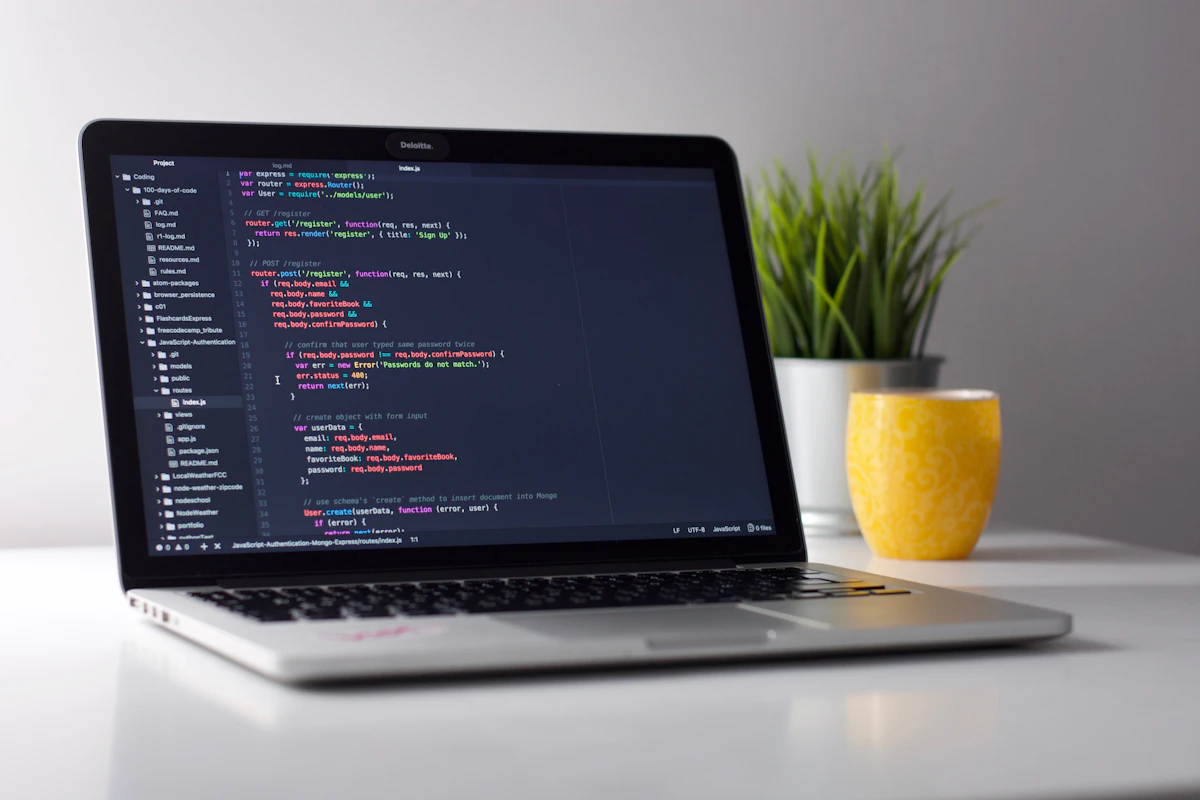
The tools reached the desk before the policy reached the ministry. Photo: Unsplash
The Study That Found Everyone Already Uses It
Professor Paul Golding, an information systems professor at UTech, and Dr Tiou Clarke, a lecturer in the university's College of Business and Management, ran the survey that supplied the headline number: 100% of tertiary students and 96% of secondary students reported using generative AI tools for academic tasks. Faculty were not far behind. Golding and Clarke found that 86.7% of teaching staff use AI to prepare classes or handle other professional work, meaning the adoption gap between students and the adults meant to guide them is already thin.
They presented the data at UTech's AI symposium on May 12, 2026, as part of a wider look at how students, academics, and employees across the region are adapting to AI. Two months later, the Gleaner picked the study back up for a news feature quoting students directly. Alexander Ashley and Kcamoni Henry, both students at Jonathan Grant High School in Spanish Town, St Catherine, described AI as a normal part of how they now approach homework and revision, the same way an earlier generation described a calculator or a search engine. That casualness is exactly what should give a policymaker pause. A tool this embedded stops being a novelty to regulate later and becomes infrastructure nobody remembers deciding to build.
A Second Study, A More Uncomfortable Question
Golding did not stop at usage rates. A separate study of his asked secondary students whether they believed AI was making them sharper, not just faster. Between 50% and 60% said yes, reporting that AI use was improving their own mental acuity. Nobody has produced independent evidence that this is true, and the professor who collected the answer is not claiming it is. What the number captures instead is belief: a large share of Jamaica's teenagers already trust the tool to make them better thinkers, whether or not that trust is earned.
Golding's own comment to the Gleaner cuts past the numbers to the actual policy problem. "What this means, though, is that the way that we teach, what we teach, the way that we assess how students learn, how we learn, will need to change." That is not a call to ban a tool. It is a professor telling his own country that the assessment system it built for a pre-AI classroom no longer measures what is actually happening inside it.
"Di children dem use it fi everyting now, essay, homework, even fi check dem answer before dem submit. Nobody tell we how much a dat is allowed." A Kingston high school teacher, describing how AI moved into her classroom faster than any guidance ever did.
The Policy Gap the Editorial Board Called Out
Jamaica is not starting from zero on AI governance generally. The country completed a national AI readiness assessment using UNESCO's Readiness Assessment Methodology earlier in 2026, one of the first in the Caribbean to do so, and the government is drafting a National AI Policy. What none of that work has produced yet is a policy specific to primary and secondary schools, the exact gap the Gleaner's editorial board pointed at on July 7. Its argument was direct: with standardised curricula and national testing already in place, the education ministry cannot leave AI policy to individual schools or individual teachers to improvise.
Jamaica Teachers' Association president Mark Malabver and former Jamaica Association of Principals of Secondary Schools president Linvern Wright have both pushed publicly for the same thing, a clear framework rather than a patchwork of school-by-school rules that leave a student in one parish facing different expectations than a student in another. Dr Nicole Manning, director of operations at the Caribbean Examinations Council, has weighed in from the exam board's side, where the practical question is blunter still: how does a regional testing body certify that a grade reflects a student's own work when the student telling you so has access to a tool that can produce convincing work on its own.

The curriculum and the exam were both built for a classroom without AI in it. Photo: Unsplash
Why This Isn't Only a Cheating Story
It would be easy to read all of this as a story about students copying essays, and Tanya Sharpe, an English language and literature teacher with nearly three decades in a Kingston-based high school, has certainly seen that version of the problem up close. But the more interesting failure mode is not dishonesty. It is dependency without literacy. A student who leans on AI to draft an essay without learning to evaluate what it produced is not cheating in any way an exam board can easily prove. They are simply leaving school able to generate text and unable to judge whether that text is any good, accurate, or theirs in any meaningful sense.
That distinction matters because the fix is different in each case. Catching cheating is a proctoring problem. Building AI literacy is a curriculum problem, and it is the one Golding's research says Jamaica has not started solving at scale. Redesigning how an essay gets assessed, so the mark reflects judgment and revision rather than just finished prose, takes time, teacher training, and a ministry willing to say plainly what is and is not acceptable. None of that exists yet in published form.
Build the AI Policy Your School or Ministry Doesn't Have Yet
StarApple AI, the Caribbean's first AI company, works directly with Jamaican schools, universities, and government agencies to turn research like Golding and Clarke's into an actual usable policy, staff training included. If your institution needs a working framework rather than a warning memo, we can help build one.
Talk to StarApple AIThe Job Numbers That Raise the Stakes
The same professor behind the classroom data has also measured what is waiting for these students after graduation, and the picture does not make the policy gap feel less urgent. In June 2026, Golding published a labour market analysis, applying International Labour Organization methodology to Jamaica's own workforce data, that put roughly 60,000 jobs at risk of elimination from AI and around 256,000 workers in exposed occupations. Women make up the larger share of that exposure, an estimated 144,000 against 112,000 men, concentrated in call centre work, data entry, typing, secretarial roles, bank telling, and entry-level accounting, the same routine, rules-based jobs that a large share of Jamaica's business process outsourcing sector still runs on.
Line those two Golding studies up next to each other and the policy failure looks worse, not better. Jamaica's students are graduating with heavy, unstructured AI use and no formal training in how to use it well, directly into a labour market where the entry-level jobs most open to a new graduate are also the ones most exposed to the technology they used to get through school. A curriculum that taught AI literacy alongside AI access would at least give students a chance to move toward the judgment-heavy work Golding's own analysis found harder to automate. A curriculum that ignores the tool until an exam board catches someone misusing it does not.
"Wi a teach dem fi pass exam, but who a teach dem fi tink when di exam done? Dat a di question nobody a ask yet." A Montego Bay parent, weighing in on the same debate the Gleaner's editorial raised.
What an Actual Policy Would Need to Do
Golding's research and the reaction to it point toward a short list of things a real policy would have to cover, not a slogan about embracing innovation. Assessment needs redesigning so that a mark can reflect a student's judgment and revision, not just a finished document that may or may not be theirs. Teachers need structured AI literacy training, not the improvised, self-taught familiarity most currently rely on. The line between acceptable use and academic dishonesty needs to be written down once, nationally, rather than left to each school's own interpretation. And any of it has to account for the schools that do not have reliable internet access, so the policy does not end up working only for institutions that were already well resourced before AI arrived.
None of that is exotic. Other jurisdictions have already published frameworks along these lines, and Jamaica's own UNESCO readiness work gives the government a starting foundation rather than a blank page. What is missing is the will to finish the document and put it in front of every school, not just the ones already equipped to figure this out on their own.
Jamaica's classrooms did not wait for permission to use AI, and in hindsight, they were never going to. The honest measure of Tourism 3.0, hurricane recovery, or any other 2026 AI initiative in this country has been whether the plan reaches the people furthest from the boardroom. Education is no different. The test now is not whether the ministry can write a policy. It is whether that policy reaches the classroom in Spanish Town as fast as generative AI already did.
Jamaica's classroom AI gap is not unique to one island. Analysts at Jamaica AI Research have tracked the same pattern, student adoption running well ahead of institutional policy, across other campuses in the region, and the Caribbean AI Association has flagged written AI governance as one of the areas regional institutions lag furthest behind on. Caribbean AI strategist Adrian Dunkley has made a related point about Jamaica's broader AI rollout: a national policy only matters once it reaches classrooms and payrolls, not just cabinet documents. For the graduates entering a job market where Golding's own labour analysis flags clerical and call centre roles as exposed, tools like World CredScore that widen access to credit may end up mattering to their futures as much as anything they learned about using AI responsibly.
Frequently Asked Questions
What did the new UTech Jamaica study find about AI use in schools?
A study by Professor Paul Golding and Dr Tiou Clarke of the University of Technology, Jamaica found that 100% of tertiary students and 96% of secondary students already use generative AI tools for academic work, alongside 86.7% of faculty who use AI to prepare classes and other professional tasks. The findings were presented at UTech's AI symposium on May 12, 2026, and covered again by the Jamaica Gleaner in July 2026.
Does Jamaica have a national AI policy for schools?
Not yet. Jamaica has completed a UNESCO AI readiness assessment and the government is drafting a National AI Policy, but as of July 2026 there is no dedicated, published policy governing how primary and secondary schools should handle generative AI in teaching, learning, or assessment. The Jamaica Gleaner's editorial board called this gap out directly on July 7, 2026.
Do Jamaican students think AI is making them smarter?
A separate study by Professor Golding found that between 50% and 60% of secondary students believe AI use is improving their own mental acuity. Educators and examination bodies such as the Caribbean Examinations Council have not endorsed that view, and Golding himself has warned that teaching, learning, and assessment methods will need to change as a result.
How many Jamaican jobs are at risk from AI, according to Professor Golding's research?
A separate labour market analysis by Golding, applying International Labour Organization methodology to Jamaica's labour data, estimated that around 60,000 jobs face potential elimination from AI and roughly 256,000 workers are in exposed occupations, with women disproportionately represented in roles such as call centre work, data entry, and entry-level accounting.
Who is calling for AI policy change in Jamaican education?
The Jamaica Gleaner's editorial board, Jamaica Teachers' Association president Mark Malabver, and former Jamaica Association of Principals of Secondary Schools president Linvern Wright have all pushed publicly for a clear national AI policy for schools, alongside researchers Paul Golding and Dr Tiou Clarke, whose data sparked the latest round of debate.
What would an effective Jamaican school AI policy need to include?
Based on the gaps researchers and educators have identified, an effective policy would need redesigned assessment methods that assume AI use rather than ban it, mandatory AI literacy training for teachers, clear rules for what counts as acceptable use versus academic dishonesty, and a plan for schools without reliable internet access so the policy does not only work for well-resourced institutions.